



Buying an apartment in Bulgaria does not, on its own, give you the right to live there. How much time an owner can spend by the sea depends on their citizenship and on the legal ground the law provides.
An EU citizen lives in Bulgaria under EU law and registers if they stay longer than three months. A non-EU national needs a D visa and a residence permit on one of the grounds set out in the law in order to live in Bulgaria for longer. One of those grounds is linked to property, but the threshold is high: BGN 600,000, or €306,775.13, per foreign national.
Below, we explain how this works in 2026. We draw on the Foreigners in the Republic of Bulgaria Act (Закон за чужденците в Република България) and its Implementing Regulations, the Act on the Entry into, Residence in and Departure from the Republic of Bulgaria of European Union Citizens and Members of Their Families (Закон за влизането, пребиваването и напускането на Република България на гражданите на Европейския съюз и членовете на техните семейства), the Bulgarian Citizenship Act (Закон за българското гражданство) and EU legislation.
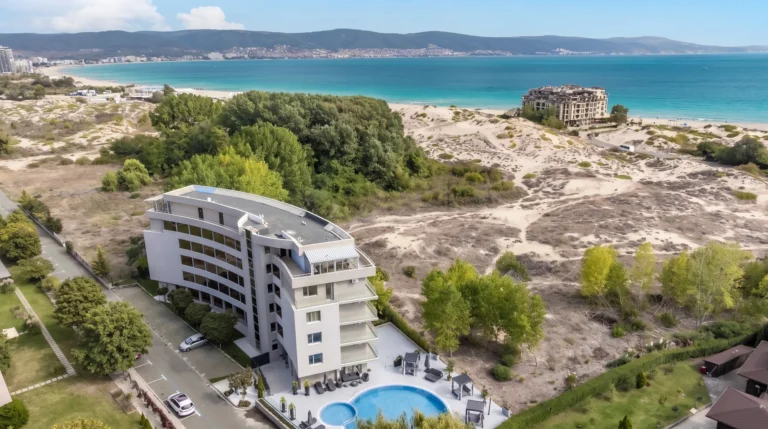
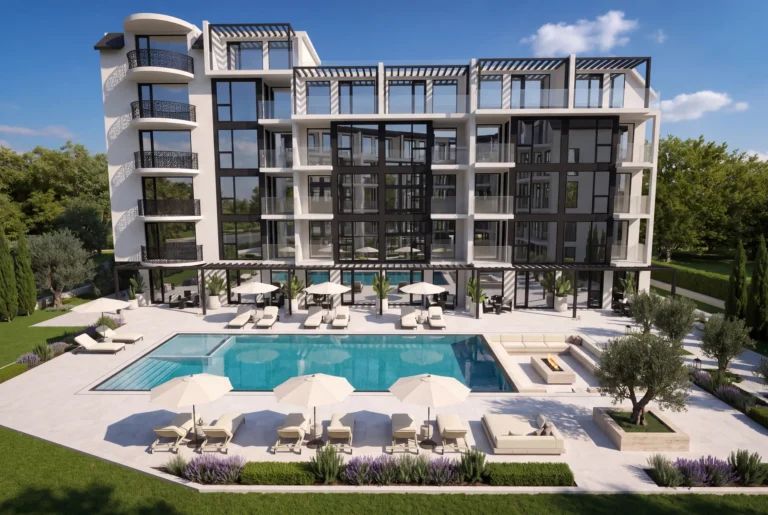
Virgin Build develops the J’Adore residences in Sunny Beach. Together with our own lawyers, we continue to support owners after the purchase, including on residence matters.
Does buying an apartment in Bulgaria give you the right to live there?
No. For a non-EU national, buying an apartment does not in itself confer a right of residence: the Foreigners Act contains no “property owner” ground. An EU citizen does not need an apartment for this — they have a right of residence without one.
Property becomes a ground for residence in only one case: where at least BGN 600,000 per foreign national has been invested in it (Foreigners Act, Art. 24(1), item 19). We cover this procedure separately below.
That said, owning an apartment helps under any other ground. For a long stay, the law requires a foreign national to have secured accommodation, and the Implementing Regulations of the Foreigners Act (Art. 14(1), item 3) call for “evidence of secured accommodation”.
The regulations do not specify the form of that evidence. Ownership of an apartment in Bulgaria is confirmed by a notarial deed, which is the natural housing document for an owner. The exact set of documents for your ground is best agreed with our lawyers in advance. The other conditions do not depend on ownership.
For most of our buyers, an apartment is a home by the sea and a euro-denominated asset, not a route to a residence permit.
How does an EU citizen register a stay of more than three months?
For up to three months, an EU citizen can stay in Bulgaria with a valid passport or identity card, without registering (Art. 6(1) of the Act on the Entry, Residence and Departure of EU Citizens). For buyers from Poland, Germany, Slovakia, the Czech Republic, Austria and Ireland, a season by the sea is an ordinary trip.
For a longer stay, an application is filed within three months of the date of entry — with the Migration Directorate of the Ministry of Interior or with a Regional Directorate of the Ministry of Interior (Art. 9(1)). For owners in the Municipality of Nessebar, this is usually the Regional Directorate of the Ministry of Interior in Burgas. The extended residence document is issued on the day the application is filed (Art. 9(4)).
The law links a stay of more than three months to one of the following conditions (Art. 8(1)):
- employment or self-employment in Bulgaria;
- health insurance and sufficient resources to live without social assistance;
- study, which also requires insurance and sufficient resources.
For an owner living on their own income or pension, the second condition is the relevant one.
The application is accompanied by a passport or identity card, documents showing that the condition is met and a receipt for the state fee. It is filed in person or, in exceptional cases, through a representative holding a notarised power of attorney (Art. 9). Extended residence is registered for up to five years (Art. 7(2)).
Under the wording of the law, an EU citizen receives an extended residence certificate. In 2025, the Ministry of Interior was preparing to issue these certificates in card format as well. Our lawyers can tell you which form Burgas issues on the date you apply — it does not affect the right itself.
Permanent residence is available to an EU citizen after five years of lawful continuous residence (Art. 16(1)). Continuity is not broken by absences of up to six months a year or by a single absence of up to twelve consecutive months for an important reason (Art. 17). The permanent residence certificate is withdrawn if the holder is absent from Bulgaria for more than two consecutive years (Art. 18).
Non-EU family members. A spouse or child of an EU citizen who holds a non-EU passport receives a residence card of a family member of a Union citizen. The application is filed within three months of entry, and the card is issued within three months (Arts 10 and 12). They, too, acquire the right of permanent residence after five years (Art. 19(1)).
How long can a non-EU owner stay in Bulgaria without a D visa?
No more than 90 days in any 180-day period. The limit applies across the whole Schengen area, and days in Bulgaria count towards it just as days in France or Italy do.
Since 1 January 2025, Bulgaria has been a full member of the Schengen area. Checks at internal air and sea borders were lifted on 31 March 2024 (Council Decision (EU) 2024/210), and at land borders from 1 January 2025 (Council Decision (EU) 2024/3212).
The 180-day window is rolling. On any given day of your stay, the days spent in Schengen during the previous 180 days are counted (Schengen Borders Code, Regulation (EU) 2016/399, Art. 6). Overstaying can result in a fine and an entry ban, so it is worth counting the days in advance.
The EU Entry/Exit System (EES) electronically records crossings of the Schengen external borders. A phased roll-out began on 12 October 2025, and since 10 April 2026 the system has been fully operational, including in Bulgaria. It replaces passport stamps with a biometric record and counts days of stay automatically.
The European Travel Information and Authorisation System (ETIAS) is an online travel authorisation for visa-exempt travellers. At the time of publication, ETIAS is not operational. The EU will announce the exact launch date several months in advance. The fee will be €20, and the authorisation will be valid for three years or until the passport expires, if sooner.
What a D visa or residence permit changes. Time spent in Bulgaria on a Bulgarian D visa or a Bulgarian residence permit does not count towards the 90/180 limit, and the Entry/Exit System does not apply to their holders. In other Schengen countries, the 90-in-180 rule still applies to them.
Is there a residence permit for property investment, and what is the threshold?
Yes. The Foreigners Act provides a ground for extended residence for a foreign national who has invested at least BGN 600,000 in property in Bulgaria. The amount is calculated per foreign national (Art. 24(1), item 19). The international press sometimes calls this ground a “golden visa”.
The conditions are precisely worded:
- a D visa is required;
- the investment is made directly or through a Bulgarian company in which the foreign national holds more than half of the capital;
- the amount has been paid in full by the date of the application;
- the funds came through a licensed Bulgarian bank, which certifies this;
- if a loan was used, its outstanding balance does not exceed 25%.
The supporting documents are listed in the Implementing Regulations of the Foreigners Act (Art. 29a): a bank certificate confirming receipt of the funds, a document on the outstanding loan balance, and documents of ownership of the property or of the company that owns it.
On conversion to euros. Bulgaria has been in the euro area since 1 January 2026, at a conversion rate of €1 = BGN 1.95583. The law still states the threshold in leva; the exact equivalent of BGN 600,000 is €306,775.13. It should not be rounded down to “€300,000”: the full amount is what counts.
A permit on this ground is issued as extended residence, for up to one year, renewable.
After five years, permanent residence can be obtained if the investment has been maintained throughout (Art. 25(1), item 17). Maintenance of the investment is confirmed by the Bulgarian Investment Agency (Българска агенция за инвестиции), which sends a document to the Migration Directorate of the Ministry of Interior.
In parallel, after five years of lawful continuous residence, EU long-term resident status is available. It allows absences of up to six consecutive months and no more than ten months in total over five years. Resources not below the set minimums and health insurance are also required.
Other investment grounds — investments in the capital of Bulgarian companies, securities, funds or priority investment projects — lead to permanent residence but are not linked to housing. The thresholds there run into millions of leva, and the conditions are more complex.
An apartment at J’Adore does not, on its own, give a non-EU national a residence permit, and we say so plainly. Virgin Build’s lawyers help owners work out which ground suits them and prepare the documents.
Which other grounds for a long stay suit property owners?
Three grounds most often suit non-EU owners: retirement, digital nomad status and family. The mechanics are the same for each: first a D visa, then a residence permit on the same ground.
How the route works. A D visa is usually issued with a validity of up to six months and allows a stay of up to 180 days with multiple entries. A personal interview at the consulate is mandatory, with no exceptions. Health insurance for the visa must cover at least €30,000 (Bulgarian Ministry of Foreign Affairs).
Next, an extended residence permit is issued by the Migration Directorate of the Ministry of Interior or its unit at the Regional Directorate of the Ministry of Interior in Burgas — for up to one year, renewable. The ground stated in the application must match the ground of the D visa.
General requirements for any ground (Implementing Regulations of the Foreigners Act, Art. 14(1)):
- evidence of secured accommodation;
- compulsory health insurance valid in Bulgaria;
- stable and sufficient resources — not below the minimum monthly wage, minimum scholarship or minimum pension in Bulgaria for the entire period of stay.
The minimum monthly wage in Bulgaria from 1 January 2026 is €620.20 (Council of Ministers decree). The rate is reviewed annually. On first application, adults submit a criminal record certificate.
The law sets deadlines for processing applications, but in practice they may vary. It is best to file well before the visa expires.
Retirees. This ground is available to those who have acquired a right to a pension under the law of Bulgaria, their own country or another state and who have sufficient resources. For many buyers from Israel, the United Kingdom and the Gulf states, this is the most natural option.
Digital nomads. Since 2025, the Foreigners Act has included a separate ground for remote workers. It covers three categories:
- an employee under an employment contract with an employer outside the EU, the European Economic Area and Switzerland, working remotely;
- an owner, partner or member of the management body of a company outside the EU, the European Economic Area and Switzerland;
- a self-employed professional providing services remotely.
In all three cases, the work is carried out remotely and no services are provided to persons in Bulgaria.
An average annual income for the previous calendar year of at least 50 minimum monthly wages is required (Implementing Regulations of the Foreigners Act, Art. 32g). At the 2026 rate, that is €31,010. If the 2025 rate is applied to 2025 income, the threshold is lower — around €27,533.
There is no settled practice yet on which rate applies, so the higher figure is the safe benchmark. The permit is granted for one year and can be renewed once for a further year.
Family. If one family member already holds an extended or permanent residence permit, the spouse and children can join them on family grounds. Separate grounds exist for family members of a Bulgarian citizen and for financially secure parents of a Bulgarian citizen or of a foreign national with permanent residence.
Your own company. The law ties the commercial activity ground to the creation of at least ten full-time jobs for Bulgarian citizens. A company set up to let out your own apartment is therefore, as a rule, not a suitable basis for residence.
Can you obtain Bulgarian citizenship through investment?
No. Naturalisation through investment was abolished by amendments to the Bulgarian Citizenship Act published in the State Gazette (Държавен вестник) No. 26 of 1 April 2022. Pending procedures were terminated.
Today, the route to citizenship is ordinary naturalisation (Art. 12(1)). The main conditions are:
- being of age;
- permanent or long-term residence in Bulgaria for at least five years;
- no conviction for intentional offences;
- an income or occupation;
- knowledge of Bulgarian;
- release from previous citizenship.
Exempt from the requirement to give up previous citizenship are, among others, citizens of the EU, the European Economic Area and Switzerland, and spouses of Bulgarian citizens.
The residence period is reduced to three years for those who have been married to a Bulgarian citizen for at least three years, for those born in Bulgaria and for several other categories. A simplified procedure applies to people of Bulgarian origin — with no residence period requirement and no language exam.
What should British, Israeli, Ukrainian and Gulf nationals know?
British, Israeli and UAE nationals, as well as Ukrainians with a biometric passport, enter visa-free within the 90/180 rule. Nationals of Saudi Arabia, Qatar, Kuwait, Bahrain, Oman, Lebanon and Russia need a Schengen C visa. Bulgaria applies the common EU visa lists (Regulation (EU) 2018/1806).
British nationals. Those who lawfully settled in Bulgaria before 31 December 2020 retain their rights under the UK Withdrawal Agreement. They need a new biometric residence card confirming these rights. With it, according to the UK government, registration in the Entry/Exit System is not required. The right of permanent residence under the Agreement is lost after an absence of more than five consecutive years.
British nationals who moved later are treated as ordinary non-EU nationals: 90 days in 180 visa-free, ETIAS once it launches, and a D visa for living in Bulgaria long term.
Israeli and UAE nationals. Visa-free entry, 90 days in 180. Once ETIAS launches, a travel authorisation will be required. For a long stay, the same grounds under the Foreigners Act apply.
Saudi Arabia, Qatar, Kuwait, Bahrain, Oman, Lebanon. A C visa is required — up to 90 days in any 180. An owner who visits several times a year should know about the multiple-entry Schengen visa, which can be issued for up to five years. Since 2024, the EU has applied a faster procedure for issuing such visas to nationals of Saudi Arabia, Bahrain and Oman.
Ukrainians. Visa-free entry with a biometric passport. Temporary protection has been extended until 4 March 2028 (Council Implementing Decision (EU) 2026/1912 of 30 July 2026).
From 31 July 2026, new applicants are granted protection on condition that they have fulfilled their military obligations towards Ukraine, with evidence where applicable. This condition does not apply to those who received protection on or before 30 July 2026 and have held it continuously in the same EU member state.
Buying an apartment does not affect temporary protection status. Anyone planning to live in Bulgaria for longer should choose a ground under the Foreigners Act in advance: work, family, retirement or digital nomad.
Russian nationals. A Schengen C visa is required. The EU–Russia visa facilitation agreement has been suspended (European Commission). It is best to check current application conditions with the Bulgarian consulate before travelling.
How Virgin Build supports owners after the purchase
If you are considering an apartment in Sunny Beach and would like to spend more time here, start with two questions: your citizenship and your actual ground for residence. We will help you understand which route is open to you — and tell you honestly if the apartment has no bearing on it.
Before turning to its own development, the Virgin Build team spent many years as a law practice and in the resale market. That is why, for us, support is part of the transaction rather than an add-on: legal due diligence, the notary (including by power of attorney), a translator, property management and furnishing.
On residence matters, our lawyers will advise which documents to gather, in what order to file them and what to take into account given your travel calendar.
Frequently asked questions
Does buying an apartment in Bulgaria give you a residence permit?
Not on its own. The ground is an investment in property of at least BGN 600,000 (€306,775.13) per foreign national, paid in full through a Bulgarian bank, plus a D visa.
Does an EU citizen need to register if they spend two summer months in their own apartment?
No. For up to three months, a passport or identity card is enough. Registration is required for stays of more than three months, and the application is filed within three months of entry.
How many days a year can you live in your own apartment without a visa?
Nationals of visa-exempt countries can stay up to 90 days in any 180-day period. The limit applies across all Schengen countries, and days in Bulgaria count towards it.
What are EES and ETIAS?
EES is the electronic system recording entries and exits, fully operational since 10 April 2026. ETIAS is a €20 online travel authorisation for visa-exempt travellers; the EU will announce its launch date several months in advance.
Does time on a D visa count towards the 90/180 limit?
Time in Bulgaria on a Bulgarian D visa or a Bulgarian residence permit does not count towards the limit. In other Schengen countries, the 90-in-180 rule applies to holders.
Can you obtain Bulgarian citizenship through investment?
No, this option was abolished in 2022. The route to citizenship is naturalisation: at least five years of permanent or long-term residence and knowledge of Bulgarian.
Which ground suits a retiree from outside the EU?
The retirement ground: a right to a pension and sufficient resources. On top of that come the general conditions — accommodation, health insurance and resources not below the minimums set in Bulgaria.
Does Bulgaria have a status for remote workers?
Yes, since 2025 — digital nomad status. It requires an average annual income of at least 50 Bulgarian minimum monthly wages; the permit is issued for one year with a single renewal for a further year.
Which route fits your situation
Our lawyers will assess your situation in light of your citizenship and plans, show you a realistic route to a longer stay and prepare the documents.
Continue reading
All articles → ArticleLiving in Sunny Beach and Nessebar all year round: winter, healthcare, flights and everyday lifeCan you live by the sea beyond the season? Climate, healthcare for EU citizens, flights, prices and paperwork, drawn from official sources.Read →
 ArticleBuying an apartment in Bulgaria without travelling: power of attorney, apostille, translation and paying from abroadBulgarian law lets you buy an apartment without ever attending the completion. We cover the power of attorney, apostille, translation,…Read →
 ArticleApartment Ownership in Bulgaria: What a Foreign Buyer Receives and How the Law Protects the PurchaseWhat the notarial deed records, why the land is not part of the purchase and what a building right is. How Bulgarian law protects the…Read →
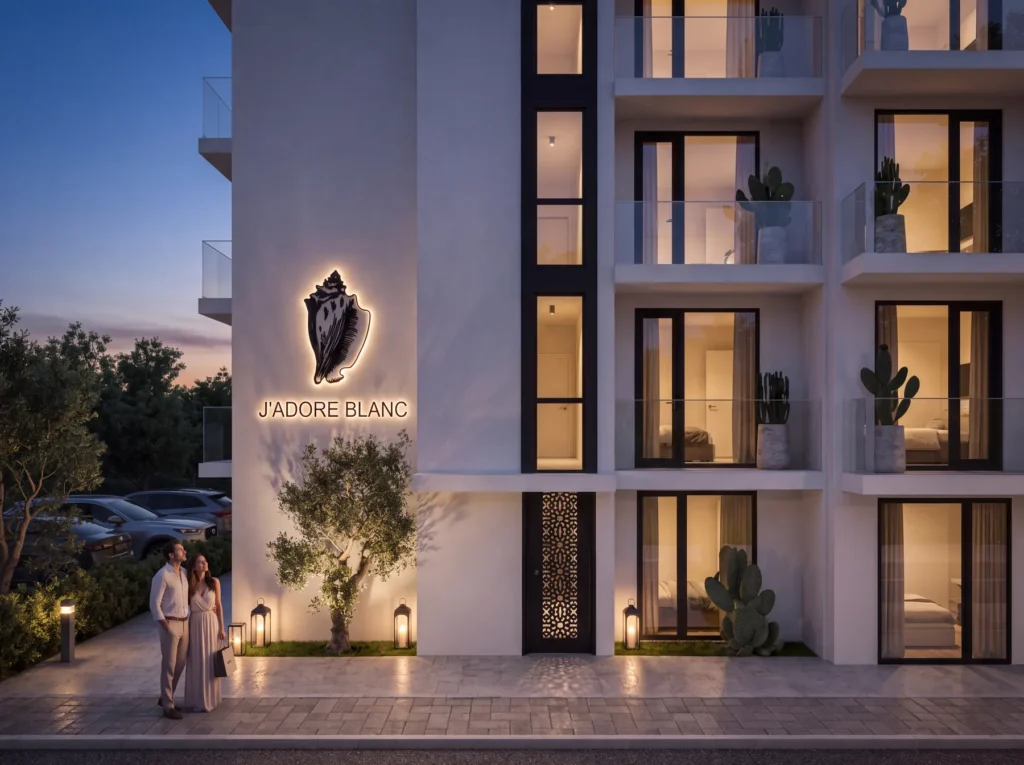 Under constructionJ’ADOREBlanc 1–2
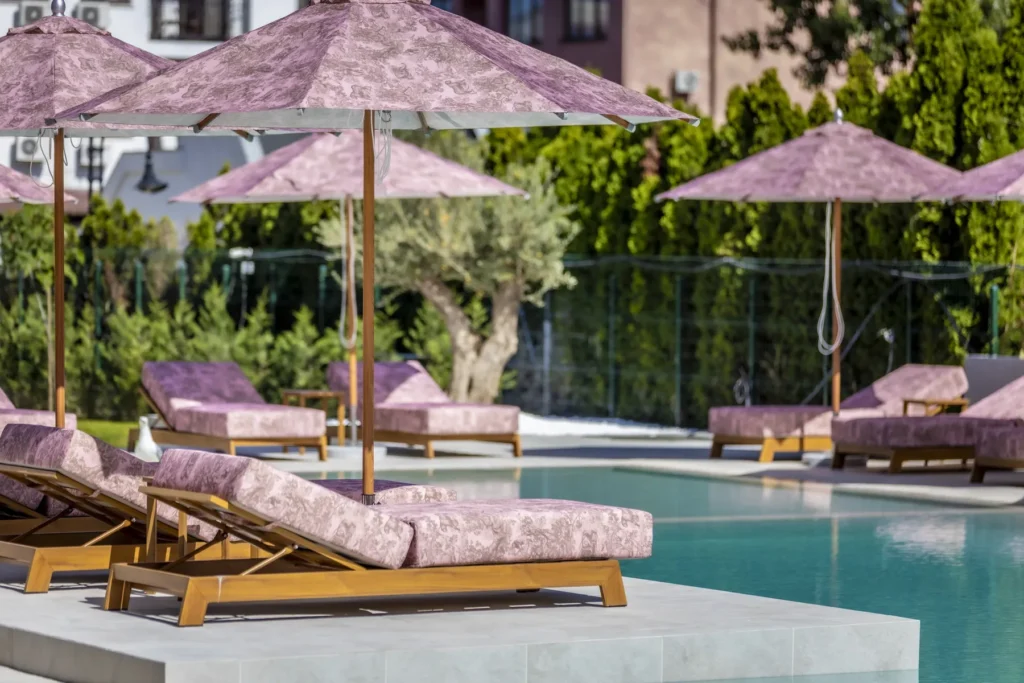 CompletedJ’ADORESecret Garden
 Completed · front lineJ’ADOREDune