



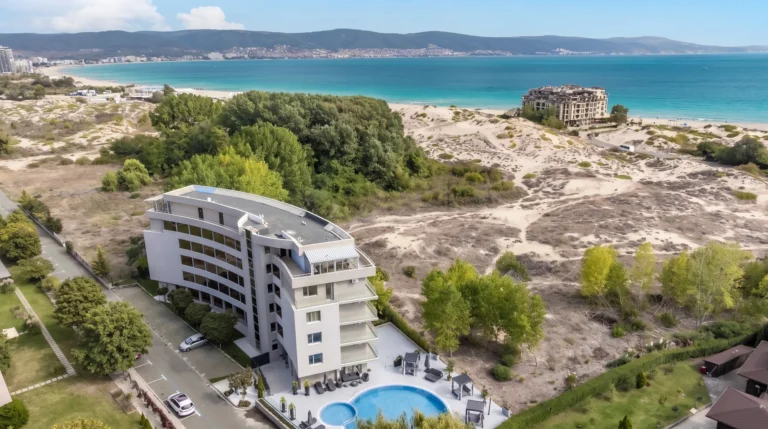
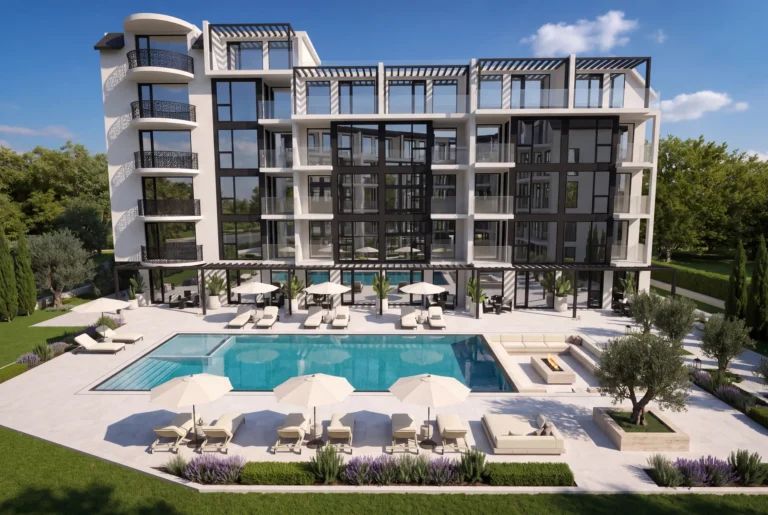
The first question buyers from Poland, Germany, Slovakia and elsewhere ask us is not about the price or the view. It is this: “Will the apartment really be mine?”
The short answer is yes. It is full private ownership. The Constitution of Bulgaria guarantees it, a notary certifies it and the state registers it.
The long answer is worth reading. However, a Bulgarian notarial deed has a different structure from the deeds many Europeans know. It does not contain the word “land” in the sense a buyer expects. Instead, it contains the concepts of “ideal shares” and “building right”. Below we explain what they mean, using a real deed from our sale of an apartment to German buyers.
Who can buy an apartment in Bulgaria
Any foreigner can buy an apartment in Bulgaria, not only an EU citizen. The Property Act expressly allows foreign nationals and foreign companies to acquire ownership of buildings. They may also acquire limited rights in rem over real estate (Property Act, Art. 29(4)).
Buying an apartment requires no residence permit, no Bulgarian company and no permission from any state authority. A Polish or German citizen therefore takes title in their own name. The terms are the same as for a Bulgarian.
The restrictions in Bulgarian law, by contrast, concern land as such. Citizens of the EU and the European Economic Area may also acquire land. The law and Bulgaria’s Treaty of Accession to the EU set the terms (Constitution of Bulgaria, Art. 22; Property Act, Art. 29(2)). When you buy an apartment in a multi-apartment complex, this question does not arise. The reason will become clear below.
What the notarial deed records: the three components of your ownership
Take a real notarial deed for the sale of an apartment in our complex on Sunny Beach. The deed describes the subject of the transaction in a single long sentence. Broken down into its parts, however, it gives the buyer three things.
1. The apartment itself. The deed calls it a “self-contained unit in a building” (самостоятелен обект в сграда) and designates it as “dwelling, apartment”. It also has its own cadastral identifier, number, floor and exact area. In our example, 34.58 m². The deed even lists the neighbouring apartments. It names who is on either side on the same floor, and who is below and above you. As a result, there is no way to mistake which apartment is yours.
2. An undivided (ideal) share in the common parts of the building. Together with the apartment, you become a co-owner of everything that belongs to the building as a whole. That means the foundations, load-bearing walls, floor slabs, staircases, roof, entrances and utility risers (Property Act, Art. 38). The deed states the share as a percentage and in square metres. In our example, 0.56%, which equals 10.20 m². That is why the deed gives the apartment a total area of 44.78 m². This figure combines the apartment itself and its portion of the common areas.
Where the land comes in
3. A share in the building right over the plot. This is the most important and the least familiar line. Together with the apartment, you also receive the same percentage of the building right (право на строеж). This right relates to the plot of land on which the building stands. In other words, it is the right to have a building on someone else’s land. It is this right that gives the building its legal basis to stand on that land.
Why the land is not part of the purchase — and why that is not a drawback
Bulgarian law allows the separation of land ownership from building ownership. The owner of a plot may grant another person the right to construct a building on it. The same right lets that person become the owner of that building (Property Act, Art. 63). Most multi-apartment complexes in Bulgaria’s resorts follow this structure.
That is why the deed describes the plot in detail: identifier, area, neighbouring plots. Yet the plot itself is not the subject of the purchase. Instead, the purchase covers the apartment, the share in the common parts and the share in the building right.
The key question that arises here: what happens if something ever destroys the building? The law gives the answer: the building right is not extinguished if the building or part of it is destroyed, unless the act establishing the right provides otherwise (Property Act, Art. 66(2)).
In other words, your share in the building right remains yours even when the building no longer stands. It therefore preserves both the legal basis and the economic value of your ownership. Before the transaction, we check the “unless provided otherwise” clause against the document that established the building right.

Full ownership: what you can do with the apartment
Ownership in Bulgaria is neither a lease nor a long-term right of use. The Constitution establishes that private property is inviolable. It also states that the law guarantees and protects the right of ownership and inheritance (Constitution of Bulgaria, Art. 17(1) and (3)).
As the owner, you can live in the apartment, rent it out or sell it. You can also give it as a gift or leave it to your heirs. None of these actions requires permission from the state or the developer.
Compulsory expropriation is possible only for state or municipal needs and only on the basis of law. Moreover, it applies only where there is no other way to meet those needs. Finally, it may proceed only after prior and equivalent compensation (Constitution of Bulgaria, Art. 17(5)). The standard is also the same for Bulgarian citizens and foreigners.
Inheritance also works without surprises. Nessebar Municipality includes Sunny Beach. There, the spouse and heirs in the direct line — children, grandchildren, parents — are fully exempt from inheritance tax (Nessebar Municipality Regulation No. 14, Art. 26 and 31).
How the law protects the transaction
The security of a purchase in Bulgaria rests on several layers of verification. Moreover, none of them depends on trusting the seller.
The notarial form is mandatory. A contract transferring ownership of real estate is valid only as a notarial deed (Obligations and Contracts Act, Art. 18). In other words, a transaction “on paper” or on a private receipt simply does not exist.
The notary verifies the seller. Before signing, the notary must verify that the seller is indeed the owner of the property. The notary must also confirm that the transaction meets all special requirements of the law. In the deed itself, the notary lists the documents behind this verification (Civil Procedure Code, Art. 586). In our example, these are the previous notarial deed for the property, the building permit and the cadastral scheme. They also include a tax assessment certificate showing no outstanding debts and a register certificate confirming there are no encumbrances. Finally, there are the minutes of the general meeting of the selling company.
What happens at the signing
The seller gives written representations. In the deed, the seller declares that it is the sole lawful owner and has not disposed of the property. It further declares the property free of litigation, mortgages, attachments, registered claims, lease agreements and preliminary contracts with other buyers. The seller also declares that the transaction does not prejudice the interests of its creditors (Obligations and Contracts Act, Art. 135). This is not a verbal promise but a statement made before a notary and recorded in an official public document.
Payment is transparent. The deed states the price. The parties also declare separately that they actually agreed on this price. In addition, they confirm that the buyer paid it in full by bank transfer.
You understand what you sign. If the buyer does not speak Bulgarian, the notary appoints a translator. The translator then gives an undertaking on the accuracy of the translation and bears legal liability for it (Civil Procedure Code, Art. 585). Before signing, you hear the deed read out and translated.
How the state registers apartment ownership in Bulgaria
The state records your ownership. The registry enters the notarial deed in the Property Register (Имотен регистър), the state real estate register of the Registry Agency. It is registration that makes your ownership effective against third parties (Property Act, Art. 112 and 113).
The register is open. The Property Register is public. Anyone can obtain information on the owner, mortgages and restrictions. This is possible at a registry office or online through the Registry Agency portal portal.registryagency.bg (source: European e-Justice Portal). So you can check the apartment before the transaction and at any time after it.
What we recommend checking before you buy
A good notarial deed is the result of good preparation. Before the transaction, the buyer or their lawyer should see:
- a document confirming the seller’s ownership (usually the previous notarial deed);
- the building permit;
- the cadastral scheme showing your apartment’s identifier;
- a certificate from the Property Register confirming there are no encumbrances;
- a tax assessment certificate showing no outstanding debts;
- the document that established the building right;
- if the seller is a company, the decision of its governing bodies to sell.
The notary also sees all of these documents at the transaction. But it is more reassuring to see them in advance.
After the transaction: an owner’s obligations
Ownership brings both rights and obligations. Every owner contributes to the cost of maintaining the building’s common parts in proportion to their share (Property Act, Art. 41). In practice, this is the annual fee for the upkeep and management of the complex. In the notarial deed, the buyer also usually undertakes to sign a contract with the management company.
On top of that comes the annual property tax. In Nessebar Municipality it is 0.22% of the tax assessment, which is almost always lower than the market price.
How it works with us
Virgin Build is more than a developer. Our company grew out of a law practice and secondary-market sales. Legal work is still part of what we do every day. We have built and handed over J’adore Secret Garden and J’adore Dune. Meanwhile, J’adore Blanc is currently under construction.
For a foreign buyer, this means three things.
First, you deal directly with the company that owns the property on sale. The notarial deed names this company as the seller.
Second, before the transaction you receive a sample of our notarial deed translated into your language. So you know every clause in advance and do not read it for the first time in the notary’s office.
Finally, a sworn translator is present at the signing. Our lawyers support you from the document review to the registration of your ownership.
Frequently asked questions
Can a foreigner buy an apartment in Bulgaria?
Yes. Foreign nationals, including those from outside the EU, can acquire ownership of buildings and apartments (Property Act, Art. 29(4)). Neither a Bulgarian company nor a residence permit is required.
Do I buy the land together with the apartment?
In multi-apartment complexes, as a rule, no. You buy the apartment, a share in the common parts of the building and the same share in the building right over the plot. The exact composition is always stated in the notarial deed.
What is a building right?
It is a right in rem to have a building on someone else’s land and to be its owner (Property Act, Art. 63). The buyer of an apartment receives a share in this right together with the apartment.
What happens if the building is destroyed?
The building right is not extinguished if the building or part of it is destroyed, unless the act establishing the right provides otherwise (Property Act, Art. 66(2)).
What are ideal shares?
They are an owner’s undivided share in the common parts of the building: the foundations, walls, staircases, roof. The share is expressed as a percentage and in square metres and is set out in the notarial deed.
How can I check that the seller really is the owner?
The notary is obliged to verify this before signing and to list the documents in the deed (Civil Procedure Code, Art. 586). In addition, the Property Register is public: information on the owner and encumbrances can be obtained online through the Registry Agency portal.
Can the apartment be passed on by inheritance?
Yes. The right of inheritance is guaranteed by the Constitution of Bulgaria (Art. 17). In Nessebar Municipality, heirs in the direct line and the spouse are exempt from inheritance tax.
See the notarial deed before the transaction.
We will send you a sample of our notarial deed in your language and answer your questions on every line. Support from document review to registration of ownership is provided by our own team and lawyers.
Continue reading
All articles → ArticleBuying an Apartment from a Developer in Bulgaria: What International Buyers Need to Know in 2026A Bulgarian developer’s guide for international buyers: new-build warranties, Nessebar property tax 0.22%, BULSTAT, realistic rental yield.Read →
 ArticleProperty Taxes in Bulgaria for Foreign Owners — The Complete 2026 GuideComplete 2026 guide to Bulgarian property taxes for foreign owners: purchase, ownership, rental, sale, inheritance. Rates in EUR.Read →
J’Adore residences
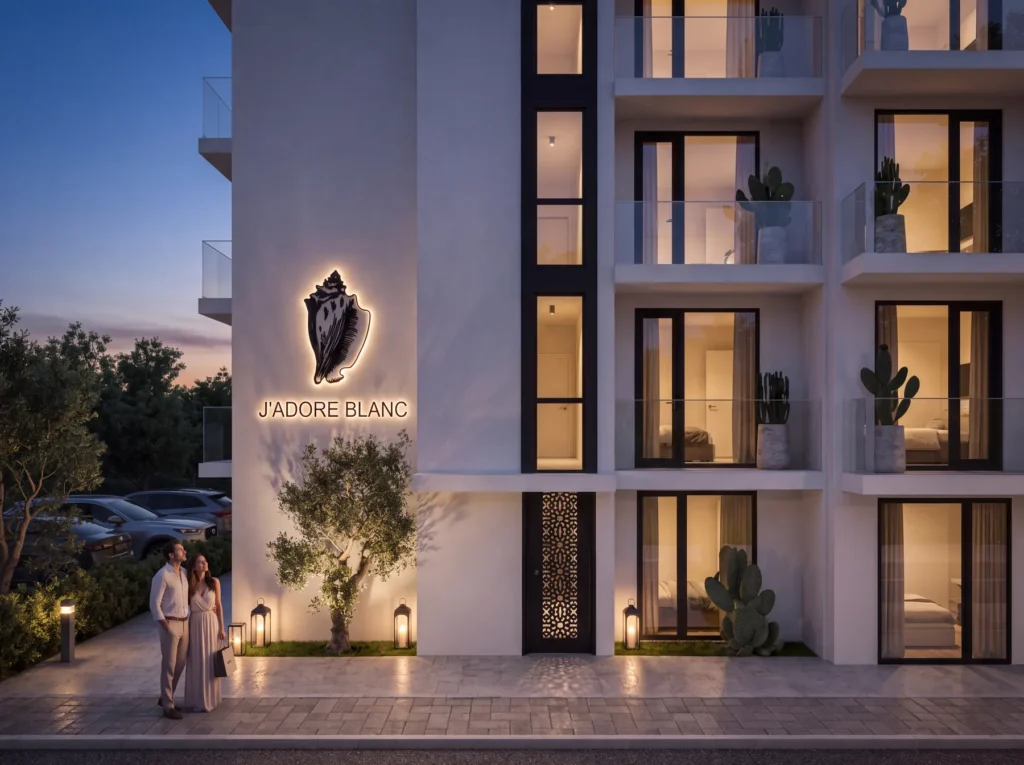 Under constructionJ’ADOREBlanc 1–2
 CompletedJ’ADORESecret Garden
Sources: Constitution of the Republic of Bulgaria, Art. 17, 22; Property Act, Art. 29, 38, 41, 63, 66, 112, 113; Obligations and Contracts Act, Art. 18, 135; Civil Procedure Code, Art. 585, 586; Nessebar Municipality Regulation No. 14; European e-Justice Portal, section “Land registers in Member States — Bulgaria”. This article is based on Bulgarian legislation in force as of October 2026 and is provided for reference only. It does not replace personal legal advice.