


Most people who buy an apartment by the sea start with summer. A year or two later, a different question arises: could they stay longer than the season — spend the winter on the coast, retire here, work remotely from a flat overlooking the water?
The answer lies in the detail, and almost all of it can be checked. There are climate norms, EU rules on healthcare, airport and price statistics, and Bulgarian residence law. This article sets out what the official sources show.
Virgin Build develops the J’Adore series of complexes in Sunny Beach and supports owners after the purchase. We hear the question of off-season living constantly. What follows are answers you can rely on when planning.
Sunny Beach and Nessebar out of season: how the coast lives in winter
Sunny Beach is a resort with a pronounced season. From late autumn to spring, most of its hotels are closed. New Nessebar and Burgas, however, function all year round, as ordinary towns with a permanent population.
The scale is clear from the figures of the National Statistical Institute (Национален статистически институт). In January 2026, Burgas Province had 81 accommodation establishments with 10 or more bed-places in operation: 5,828 beds and 30,783 nights spent over the month. In July 2026 there were 925 such establishments, with 140,360 beds and 2,876,601 nights spent.
In other words, in winter roughly one in eleven of the establishments operating in July is open. Private apartments and small houses with fewer than ten bed-places are not included in this survey.
Eurostat shows the same picture across the year. In 2025, around 89% of nights spent in accommodation in the South-East region, which includes Burgas Province, fell between June and September.
For those who live here permanently, this means a different rhythm: quieter streets, an emptier promenade, a beach made for long walks. Everyday infrastructure — shops, pharmacies, banks, restaurants — is concentrated in winter in New Nessebar and Burgas. In the resort itself, a large share of venues open only for the season.
Old Nessebar is open to visitors all year. The ancient town was inscribed on the UNESCO World Heritage List in 1983. According to the latest published schedule of the Ancient Nessebar museum (Древен Несебър), in the winter months the Archaeological Museum and the Church of St Stephen open daily from 9:00 to 17:00, while the other churches and the Ethnographic Museum open on request. It is worth checking current opening hours on the museum’s website before a visit.
Nor does the region empty out. According to the National Statistical Institute, at the end of 2025 Burgas Province had 391,500 residents — 2,581 more than a year earlier. It is one of five Bulgarian provinces where the population grew in 2025.
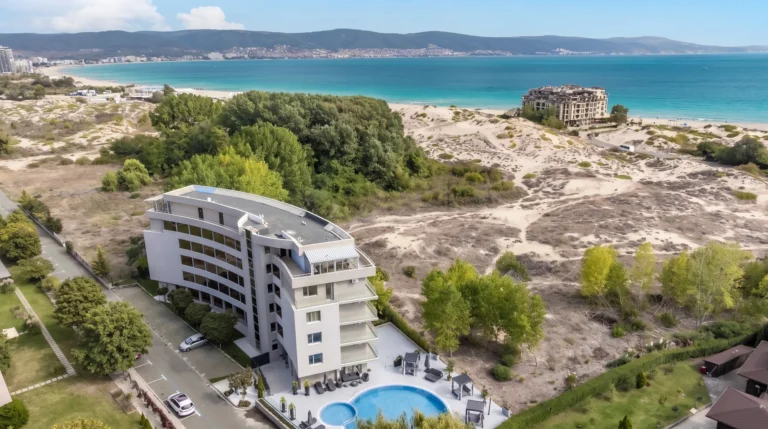
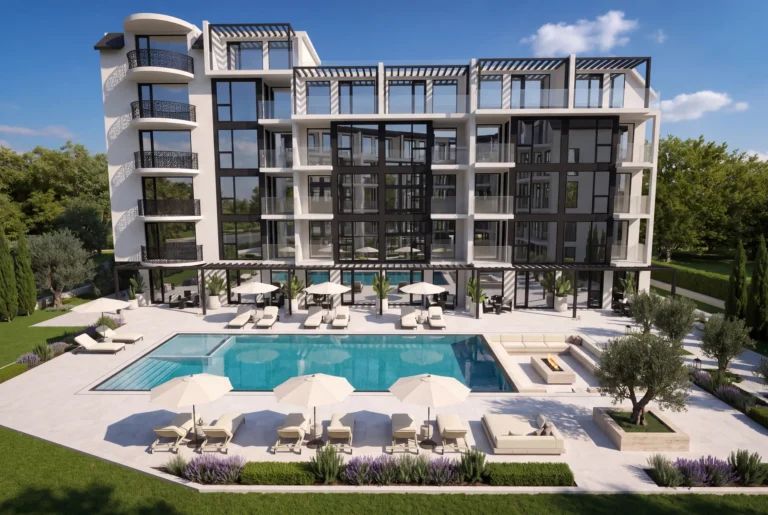
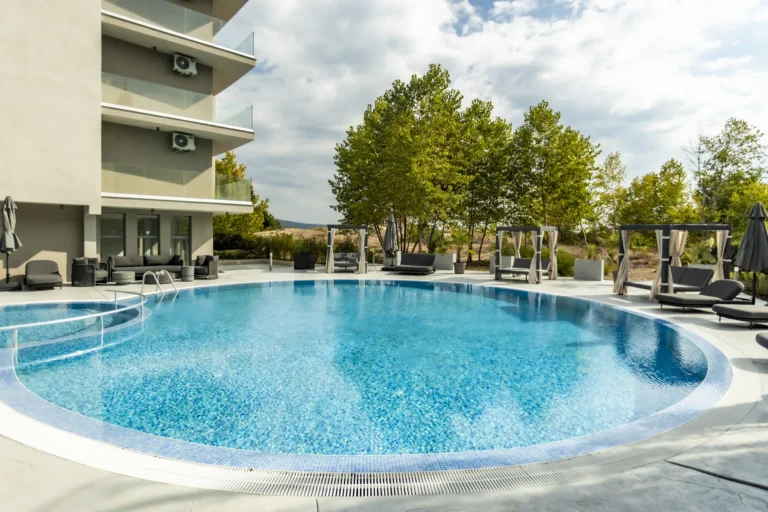
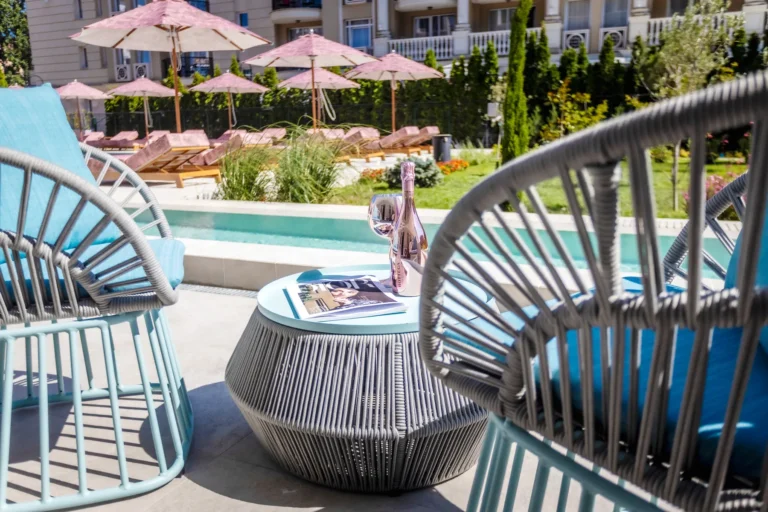
For J’Adore owners, the question is a practical one. J’Adore Dune and J’Adore Secret Garden are completed complexes, and their apartments can be used well beyond the season. How each complex is serviced in winter is something we explain to every buyer individually.
Winter weather: climate norms and recorded data
Winter on the coast is cool and mild. The average temperature in Burgas in January, the coldest month, is around 3 °C.
The National Institute of Meteorology and Hydrology (Национален институт по метеорология и хидрология) uses climate norms for 1991–2020. According to its monthly bulletins, the norm for Burgas is 9.5 °C in November, 4.6 °C in December, around 3 °C in January, around 4 °C in February and around 7 °C in March.
Any given winter can differ noticeably from the norm. In November 2025 the average temperature in Burgas was 13.5 °C, 4 °C above the norm; in December it was 7.0 °C, 2.4 °C above. Average monthly temperatures on the Black Sea coast were 6–8 °C in December 2025 and between 3 °C and 6.6 °C in January 2026. In February they ranged from 3.9 °C in Shabla in the north to 6.2 °C in Ahtopol in the south. These are figures for a single season, not a promise for the years ahead.
The sea cools gradually. According to the institute’s bulletins:
- November 2025: water temperature fell from 16–18 °C to 15–16 °C;
- December 2025: from 13–16 °C to 9–11 °C;
- January 2026: by the end of the month, 5–6 °C on the northern coast and around 8 °C on the southern coast, where Sunny Beach lies;
- February 2026: 5–8 °C at the start of the month and 4–7 °C at the end;
- March 2026: the sea warms again, from 4–7 °C at the start of the month to 8–10 °C by its end.
A word on sunshine. The institute does not count “sunny days” but hours of sunshine. In January 2026, the sunniest place in Bulgaria was Varna, with 100 hours over the month.
Healthcare for EU citizens: the EHIC, the S1 form and the Bulgarian system
EU citizens receive healthcare in Bulgaria under the EU coordination rules. While travelling, they use the European Health Insurance Card (EHIC). After moving, they rely on the S1 form or on Bulgarian health insurance.
Trips and winter stays: the European Health Insurance Card
Under Regulation (EC) No 883/2004, Article 19(1), a person on a temporary stay receives the care that becomes medically necessary during that stay. Their rights are the same as those of people insured in the country of stay.
The card is valid only within the state healthcare system. It does not cover private treatment, rescue operations, repatriation or planned treatment. Travel insurance therefore remains a useful complement rather than an unnecessary expense.
In Bulgaria, the state system means doctors and hospitals under contract with the National Health Insurance Fund (Национална здравноосигурителна каса). What matters is the contract with the fund, not whether the provider is publicly or privately owned. An EHIC holder pays the same patient fees as someone insured in Bulgaria.
How much the patient fee is
The Health Insurance Act (Закон за здравното осигуряване), Article 37(1), provides for a fixed patient fee for each visit to a doctor or dentist and for each day of hospital treatment, for no more than ten days a year.
According to guidance from the National Health Insurance Fund dated 5 March 2026, the fee for a doctor’s visit is €1.48, and €0.51 for those receiving an old-age and length-of-service pension.
Retiring here: the S1 form
A pensioner or insured person from another EU country who has moved to Bulgaria obtains an S1 form in their home country. It is registered with the health insurance institution at their place of residence (Regulation 883/2004, Articles 17 and 24; Regulation (EC) No 987/2009, Article 24(1)).
Once registered, they receive care as if they were insured in Bulgaria, with the cost borne by the country that issued the S1. The exception is set out in Article 23 of Regulation 883/2004: if Bulgaria also pays a pension, Bulgaria covers the care.
For residents of Nessebar and Sunny Beach, this is the Burgas Regional Health Insurance Fund (Районна здравноосигурителна каса — Бургас). Address: Burgas 8018, Ezero Park; opening hours 8:30 to 17:00. Advice on healthcare rights within the EU is available on (056) 80 66 16, (056) 80 66 66 and (056) 80 66 47. It is best to confirm the list of documents for S1 registration with the fund in advance.
An S1 holder from another country does not become compulsorily insured in the Bulgarian system. The Health Insurance Act, Article 33(2), excludes those who, under the coordination rules, must be insured in another EU member state.
Bulgarian health insurance
Article 33(1) of the Health Insurance Act lists those who are compulsorily insured with the National Health Insurance Fund. They include:
- foreign nationals with long-term or permanent residence permits (point 3);
- people with temporary protection, which applies to Ukrainian citizens (point 4a);
- persons to whom Bulgarian law applies under the EU coordination rules (point 6).
Anyone not insured on any other basis may pay health insurance contributions themselves. According to the National Revenue Agency (Национална агенция за приходите), from 1 August 2026 this contribution is €24.81 a month, payable by the 25th of the following month.
For an EU citizen, this route is open only if their insurance is governed by Bulgarian law under the coordination rules. If the person is insured in their home country or receives a pension there, the right instrument is the S1 form, not self-paid contributions.
Emergencies. The single European emergency number 112 works free of charge throughout Bulgaria, from landlines and mobile phones.
The UK, Ireland and non-EU countries: what to consider on insurance
Irish citizens use the standard European Health Insurance Card on the same terms as other EU citizens.
The UK Global Health Insurance Card (GHIC) covers state healthcare in the EU that cannot wait until you return home. The NHS states plainly that the GHIC is not a substitute for travel insurance.
Recipients of a UK State Pension who live in Bulgaria may be entitled to healthcare funded by the UK. According to GOV.UK, the S1 form for this is requested by telephone from the NHS Overseas Healthcare Services.
Foreign nationals staying in Bulgaria for a short or extended period pay for healthcare themselves, unless an international agreement to which Bulgaria is party applies to them (Health Insurance Act, Article 39(5)).
The practical conclusion for buyers from Israel, the Gulf states and other non-EU countries: private health insurance is needed for the entire length of the stay.
Winter flights: Burgas, Varna and Sofia airports
In winter the coast is reached through Burgas and Varna airports, but air traffic runs at a calmer pace. There are fewer direct international routes than in summer, and some journeys are easier to plan via Sofia.
Both Black Sea airports are operated by the concessionaire Fraport Twin Star. In 2025 they handled 3.7 million passengers between them, 10.4% more than a year earlier.
Seasonality is marked. In January 2026 Burgas and Varna together handled 92,263 passengers, in February 79,968, and in August 875,035. Winter traffic is nine to eleven times lower than at the peak, but it is growing year on year: by 16.2% in January and 11.4% in February.
Direct destinations and flight frequencies change from season to season, so we do not list specific winter routes here. Current schedules are published by the airports and airlines themselves.
If there is no direct flight to Burgas, the practical alternatives are Varna airport and Sofia airport, followed by a domestic flight, train, coach or car. Bulgaria Air has announced that in winter 2026/2027 it will operate Sofia–Burgas flights three times a week.
Distances on the ground: Burgas airport is about 30 km from Nessebar. The nearest railway station is also in Burgas, 35 km from Nessebar.
The cost of living: what Eurostat shows
According to Eurostat, Bulgaria has the lowest level of consumer prices in the EU: 62.5% of the EU average in 2025, or roughly 37% lower.
For comparison, the 2025 price level index (EU = 100) stood at 108.3 in Germany, 113.0 in Austria, 136.2 in Ireland, 89.4 in Czechia, 85.2 in Slovakia and 73.3 in Poland.
By our calculation based on Eurostat data, the overall price level in Bulgaria is about 42% below Germany’s, 45% below Austria’s, 30% below the Czech level, 27% below the Slovak and 15% below the Polish.
The picture varies by category, and it is useful to understand this in advance:
- food and non-alcoholic beverages: 92.6% of the EU average, close to the European mean;
- restaurants and accommodation: 55.7%;
- electricity, gas and other fuels: 54.2%;
- health: 46.6%.
Bulgaria’s price level is gradually converging on the EU average: 49.3% in 2014, 60.5% in 2024 and 62.5% in 2025. This is an observation about the past, not a forecast. Eurostat figures are national averages; there are no separate statistics for Nessebar.
An owner’s fixed costs do not depend on the season. Property tax in Nessebar Municipality in 2026 is 0.22% of the tax valuation, which is below market price. The maintenance fee is €18 per m² a year including VAT at J’Adore Secret Garden, and €15 per m² a year (excluding VAT) at J’Adore Dune.
Remote work, connectivity and children
The basic infrastructure for remote work is in place. According to Eurostat, in 2025 92.82% of Bulgarian households had internet access at home, against an EU average of 94.76%.
For EU citizens, “roam like at home” applies in Bulgaria: calls, texts and mobile data at domestic rates. The rule comes with a fair use provision.
An operator may contact a customer and then apply surcharges if, over four months, the person has spent more time abroad than at home and used more roaming than domestic services. For a winter stay of several months, a local SIM card or a broadband connection installed in the apartment is therefore more convenient.
Non-EU citizens who work remotely may consider digital nomad status, introduced into the Foreigners in the Republic of Bulgaria Act in 2025. The conditions and the most suitable residence option are best discussed with a lawyer before moving.
On children: under the Pre-school and School Education Act (Закон за предучилищното и училищното образование), Article 8(1), pre-school education in Bulgaria is compulsory from the school year beginning in the year the child turns four.
Admission to kindergartens is set by the municipality, while the choice of school, the language of instruction and the admission of foreign children are decided by each school. These matters are best settled before the move.
Staying longer than three months: registration for EU citizens
The legal basis is the Act on the Entry, Residence and Exit of European Union Citizens and Their Family Members from the Republic of Bulgaria (Закон за влизането, пребиваването и напускането на Република България на гражданите на Европейския съюз и членовете на техните семейства).
The key rules:
- for up to three months, an EU citizen may stay in the country with a valid passport or identity card, without registration (Article 6(1));
- for a longer stay, an application is submitted within three months of the date of entry, to the Migration Directorate of the Ministry of Interior or to a regional directorate of the Ministry (Article 9(1));
- the certificate of long-term residence is issued on the day the application is submitted (Article 9(4)), and long-term residence is granted for up to five years (Article 7(2)).
Those who do not work in Bulgaria, including pensioners, need health insurance and sufficient resources to cover the cost of their stay (Article 8(1), point 2; Directive 2004/38/EC, Article 7(1)(b)). Which insurance document will be accepted in a particular case is best confirmed before applying.
Address registration is governed separately by Bulgarian law. Under the Civil Registration Act (Закон за гражданската регистрация), Article 92(1), it is carried out by the kmet (mayor) of the municipality, district or mayoralty at the person’s request.
Under Article 3(2) of the same act, the population register includes Bulgarian citizens and foreign nationals with long-term or permanent residence permits. How these rules apply to a particular EU citizen in Nessebar Municipality is something our lawyers clarify case by case.
For non-EU citizens the rules are different: the 90/180 rule, the D visa and the grounds for a residence permit. These are worth going through with a lawyer before the purchase or immediately after it.
An owner’s obligations do not depend on the length of stay. A foreign owner without a Bulgarian personal number is registered in the BULSTAT register, and property tax is paid according to the municipal calendar: in full with a 5% discount by 30 April, or in two instalments, by 30 June and by 31 October.
Living by the sea out of season is a matter of preparation, not luck: healthcare documents, residence registration, clear logistics and an apartment ready for winter. Virgin Build supports owners at every stage — from choosing the apartment and completing the purchase, including by power of attorney, to registration, management and furnishing. Behind us are many years of legal practice and experience in resale transactions, so the legal side of a move is handled within one team.
Frequently asked questions
Is Sunny Beach open in winter?
The resort runs at a calmer pace, with most hotels closed. According to the National Statistical Institute, in January 2026 Burgas Province had 81 accommodation establishments with 10 or more bed-places in operation, against 925 in July. New Nessebar and Burgas function all year round.
What is the weather like on the coast in winter?
Under the 1991–2020 climate norm, the average temperature in Burgas is 4.6 °C in December, around 3 °C in January and around 4 °C in February. By the end of winter the sea cools to 4–8 °C.
Is the European Health Insurance Card valid in Bulgaria?
Yes. It entitles the holder to necessary healthcare in the state system — from doctors and hospitals under contract with the National Health Insurance Fund — on the same terms as people insured in Bulgaria. It does not cover private treatment, repatriation or planned treatment.
How does an EU pensioner living permanently in Bulgaria access healthcare?
Through the S1 form issued by the country that pays the pension. It is registered with the regional health insurance fund at the place of residence, after which care is provided on the same terms as for people insured in Bulgaria.
What if I have neither an EHIC nor an S1?
In that case a foreign national pays for healthcare themselves, unless an international agreement applies to them. Non-EU citizens need private health insurance.
How do I reach the coast in winter?
Burgas and Varna airports operate all year, but in winter there are fewer direct routes and traffic is nine to eleven times lower than in summer. The alternative is to fly to Sofia and continue by domestic flight, train, coach or car.
What must an EU citizen arrange when living in Bulgaria for longer than three months?
An application to register residence must be submitted to the Ministry of Interior authorities within three months of the date of entry. The certificate is issued on the day of application. Those not working need health insurance and sufficient resources.
By the sea, well beyond summer
We will explain how life works out of season in the completed J’Adore Dune and J’Adore Secret Garden complexes, and help with the paperwork, from the purchase to residence registration.
Continue reading
All articles → ArticleResidence in Bulgaria for property owners in 2026: EU citizens, the 90/180 rule, the D visa and residence permitsAn apartment in Bulgaria does not, on its own, give you the right to live there. We explain on what grounds an owner can stay by the sea…Read →
 ArticleSunny Beach, Nessebar, Sveti Vlas, Pomorie or Burgas: how to choose where to buy an apartment on Bulgaria’s southern coastFive locations within about 40 km of Burgas Airport, five different ways to own by the sea. We compare Sunny Beach, Nessebar, Sveti…Read →
 ArticleThe maintenance fee and annual costs of owning an apartment in Sunny Beach: what Bulgarian law saysWhat an apartment owner in Sunny Beach pays every year, and which rules of Bulgarian law protect the owner.Read →
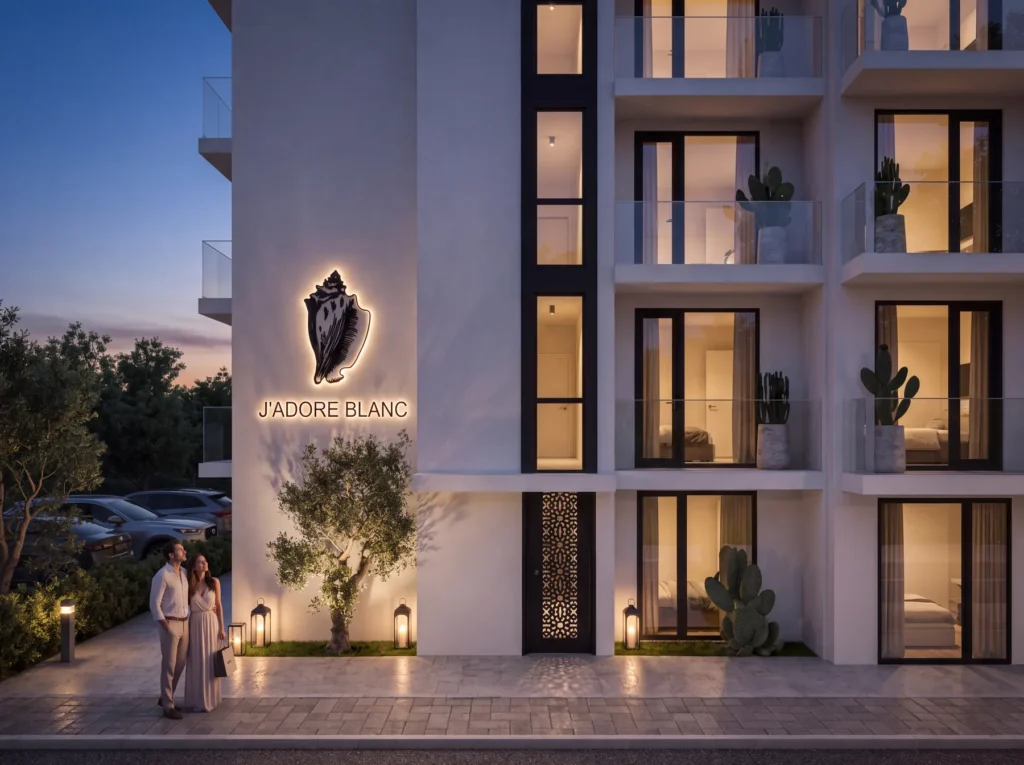 Under constructionJ’ADOREBlanc 1–2
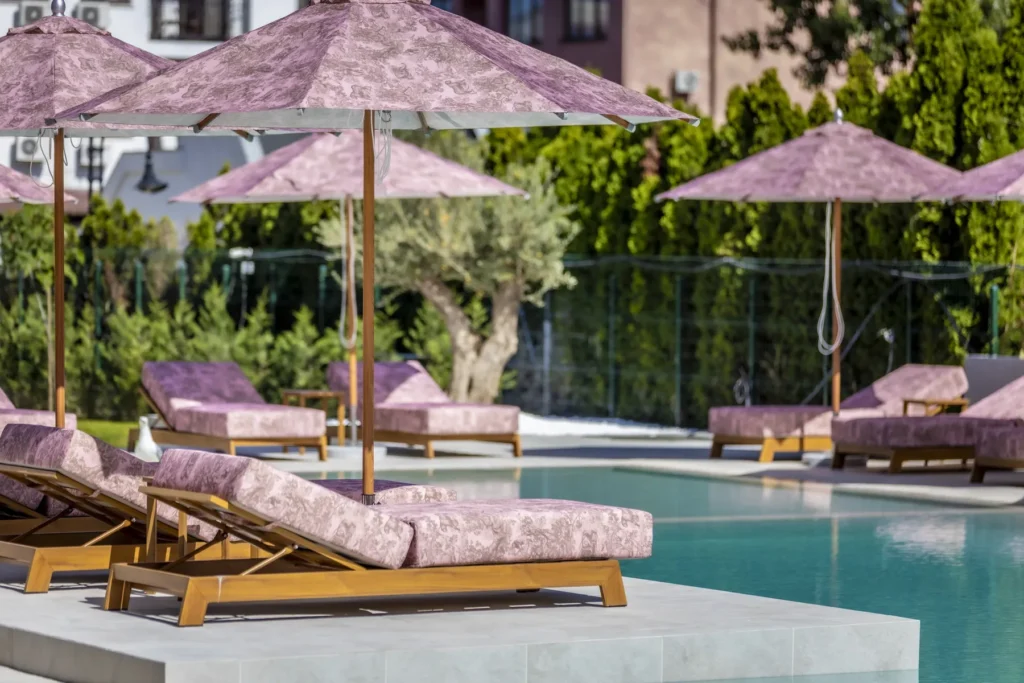 CompletedJ’ADORESecret Garden
 Completed · front lineJ’ADOREDune